
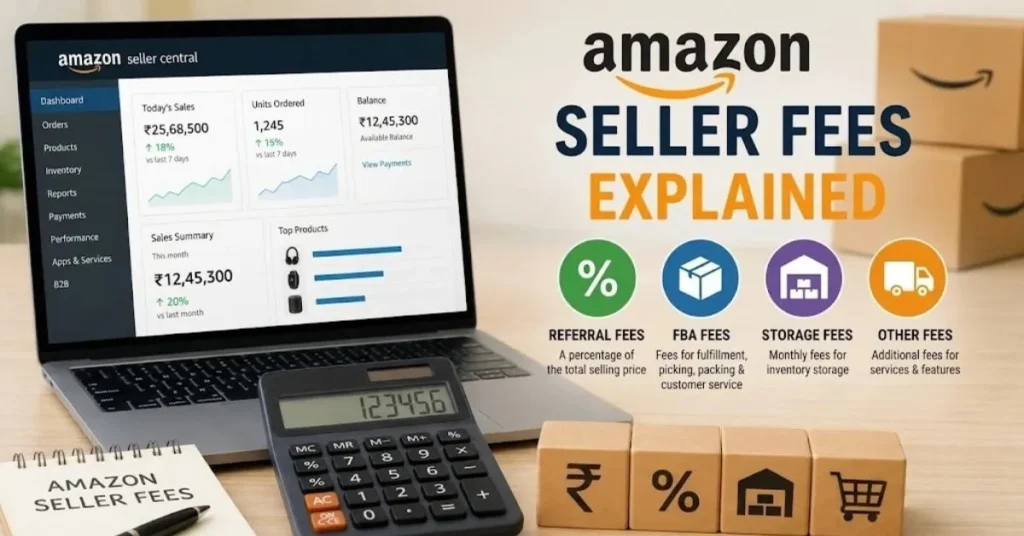
How Amazon Charge for Selling: Complete Guide to Amazon Seller Fees
In this guide, you will understand how to go about charging for your Amazon product. In this guide on how amazon charge for selling, you will learn all about Amazon Seller Fees.
Being an Amazon seller is one of the most effective ways to market to millions of customers, expand your online enterprise, and make money. But before you enter the sales, you need to know Amazon selling costs so you can make the correct calculations regarding profit.
Amazon adopts various types of fees depending on the type of product being sold, the fulfillment package utilized, and what kind of selling plan a seller elects to follow. When these charges are known beforehand, you can be sure to charge the right amount for your products and not run into unknown expenses.
Let’s explain how amazon charge for selling in simple terms so beginners can understand.
Why Is It Important to Understand How Amazon Charge for Selling?
Many new sellers get concerned with only product cost and selling price. Amazon, however, takes a cut in a number of fees before you start getting paid.
With the knowledge of Amazon sales charges, you can:
- Determine real profit margins
- Set competitive pricing
- Avoid losses
- Select the best fulfillment option
- Plan advertising budgets
- Grow your company with assurance
You make sound decisions for your business when you’re aware of all your charges.
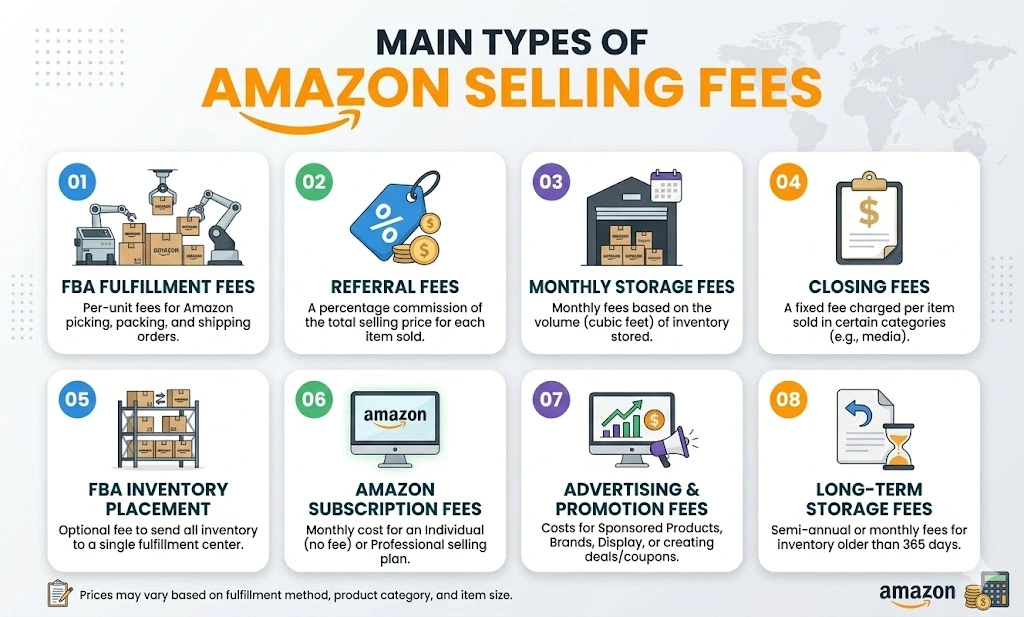
Main Types of Amazon Selling Fees
As a rule, Amazon will charge sellers the following:
- Referral Fees
- Closing Fees
- Shipping Fees
- Fulfillment by Amazon (FBA) Fees
- Storage Fees
- Subscription Fees
- Advertising Costs
- Refund Administration Fees
Let’s get to know them individually.
1. Referral Fees
Each time someone buys something through Amazon, Amazon charges a commission known as referral fees.
This fee is based on the selling price of the product.
Typical Referral Fee Range
The referral fees on most categories range from 5% to 20%.
Examples:
- Electronics: around 5% to 8%
- Fashion: around 5% to 17%
- Home & Kitchen: around 15%
- Beauty: around 8% to 15%
Now if you sell a product for ₹1,000 and the referral fee is 15 percent, then you have to pay Amazon ₹150.
2. Closing Fees
Amazon may require a per-item closing fee.
The amount varies according to:
- Product price
- Shipping method
- Category
This is typically a minor expense and should be taken into account when calculating income.
3. Shipping Fees
Shipping fees are based on the fulfillment method used.
Easy Ship
The shipping cost depends on the size and weight of package items sold on Amazon.
Self-Ship
All courier fees are your own responsibility.
Fulfilled by Amazon (FBA)
Shipping costs are included in FBA fees.
4. Fulfilled by Amazon (FBA) Fees
For Amazon FBA, the costs are:
- Pick and pack fees
- Weight handling fees
- Customer service fees
- Return handling fees
FBA is readily available, but requires an additional fee.
5. Storage Fees
Amazon storage fees are calculated when products are kept in Amazon’s warehouses, based on the following:
- Space occupied
- Time stored
- Peak season (higher during busy periods)
Unsold items may incur long-term storage fees.
6. Subscription Fees
Amazon has two selling programs.
Individual Plan
No subscription fee; however, some extra charges may apply per item.
Professional Plan
Advanced selling tools plus a fixed monthly payment.
The Professional Plan is selected by most businesses.
7. Advertising Costs
If you are running Amazon PPC campaigns, charges for ads will be added separately.
You determine where and how much to spend on ads and only pay when customers click on your ads.
Product visibility can be enhanced significantly with advertising.
8. Refund Administration Fees
Amazon refunds the customer if they return the product, though a small portion of fees might still be withheld for administration.
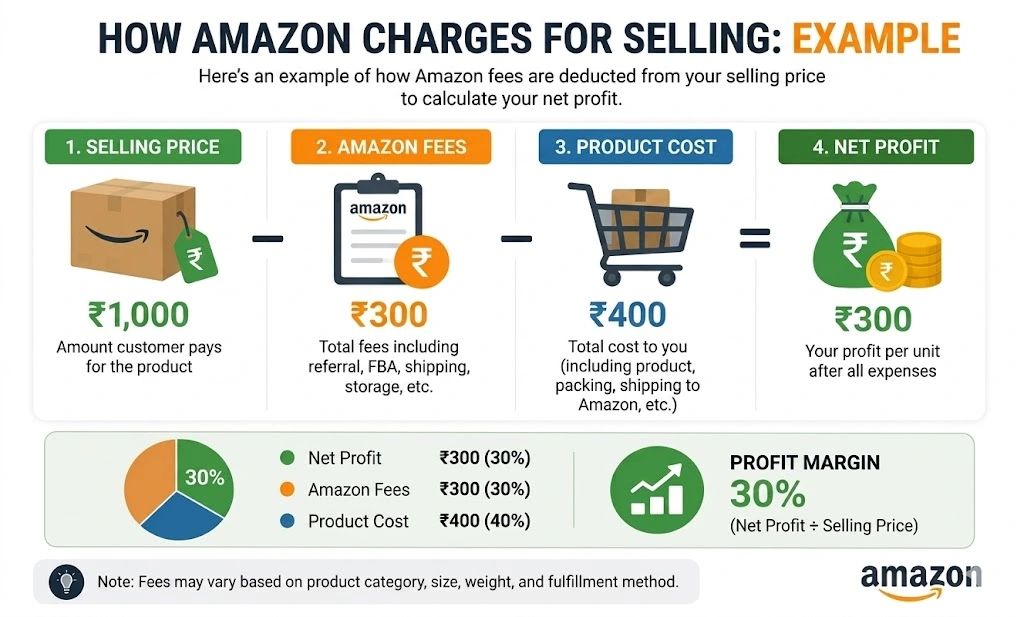
How Amazon Charge for Selling: Example
Suppose that the price of the product you sell is ₹1,000.
After Amazon charges all applicable fees, your net revenue might be ₹700.
If your product cost is ₹400, your profit = ₹300.
Factors That Influence Amazon Selling Fees
When people sell on Amazon, a few elements have an impact on their selling costs:
- Product category
- Selling price
- Product size and weight
- Fulfillment method
- Storage duration
- Advertising spend
- Return rate
How to Reduce Amazon Selling Fees
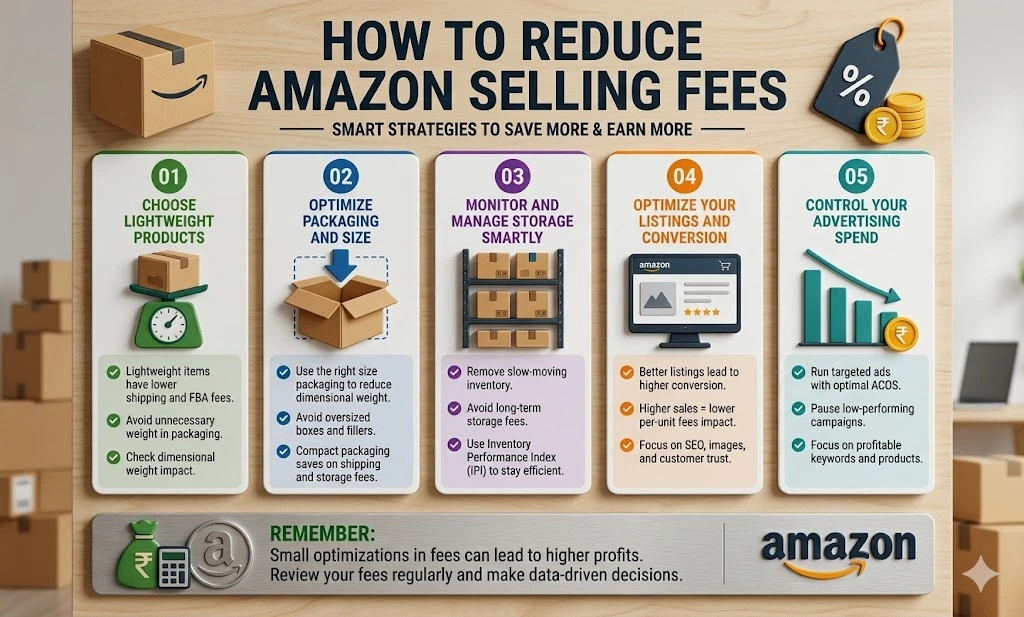
Choose Lightweight Products
Reduce shipping and FBA charges.
Optimize Packaging
Lower dimensional weight charges.
Monitor Storage
Avoid long-term storage fees.
Improve Listings
Improved listings increase conversions and reduce ad waste.
Control Advertising Spend
Monitor and optimize ACOS.
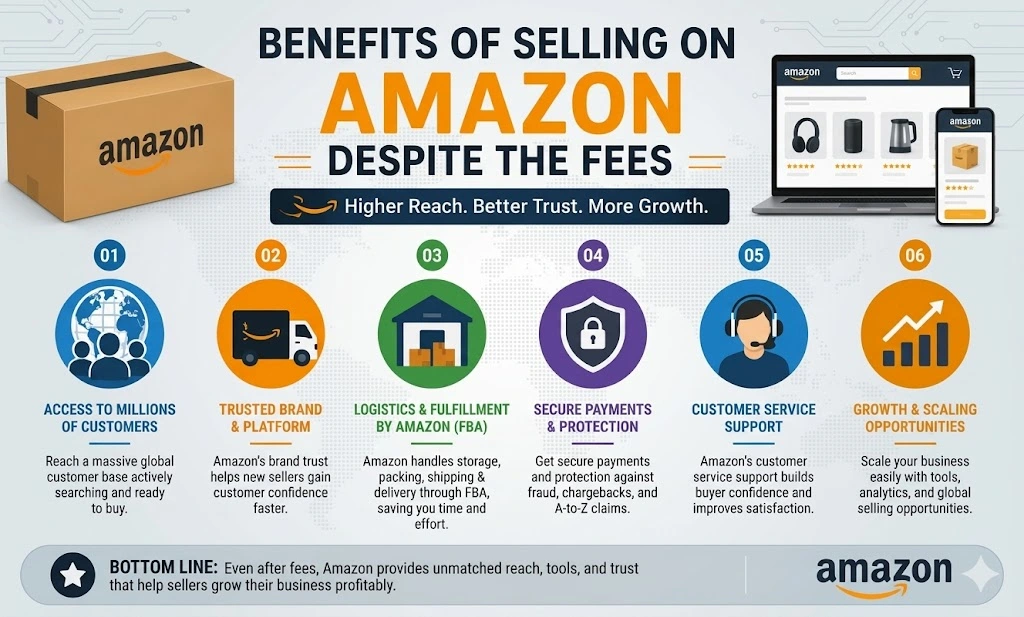
Benefits of Selling on Amazon Despite the Fees
While there are several fees charged by Amazon, there are several benefits sellers receive:
- Millions of customers
- Trusted marketplace
- Secure payment processing
- Logistics support
- Customer service
- Marketing tools
Most companies will find the advantages greater than the disadvantages.
How EcomExpert Can Help You Control Amazon Fees
EcomExpert helps businesses understand how amazon charge for selling and optimize profitability.
Our services include:
- Product profitability analysis
- Fee estimation
- Product listing optimization
- PPC management
- Inventory planning
- Complete account management
We assist sellers in minimizing unwanted expenses and maximizing returns.
Frequently Asked Questions
What Does Amazon Charge to Sell Something?
Charges vary depending on product category, fulfillment method, and advertising investment.
What Is the Referral Fee?
It’s Amazon’s commission, which is typically a percentage of the product cost.
Does the Cost of FBA Justify It?
Yes, for many sellers. FBA helps increase delivery speed and customer confidence.
Can You Sell Without Paying a Monthly Fee?
Yes, depending on the selling plan available in your marketplace.
Final Thoughts
Knowing how amazon charge for selling is crucial to making your Amazon business profitable.
Amazon fees include referral fees, fulfillment fees, advertising costs, and storage charges. When these charges are carefully calculated, products can be priced appropriately and your profit margins can be preserved.
EcomExpert is on your side when you need professional assistance with fee analysis, listing optimization, and account management.