
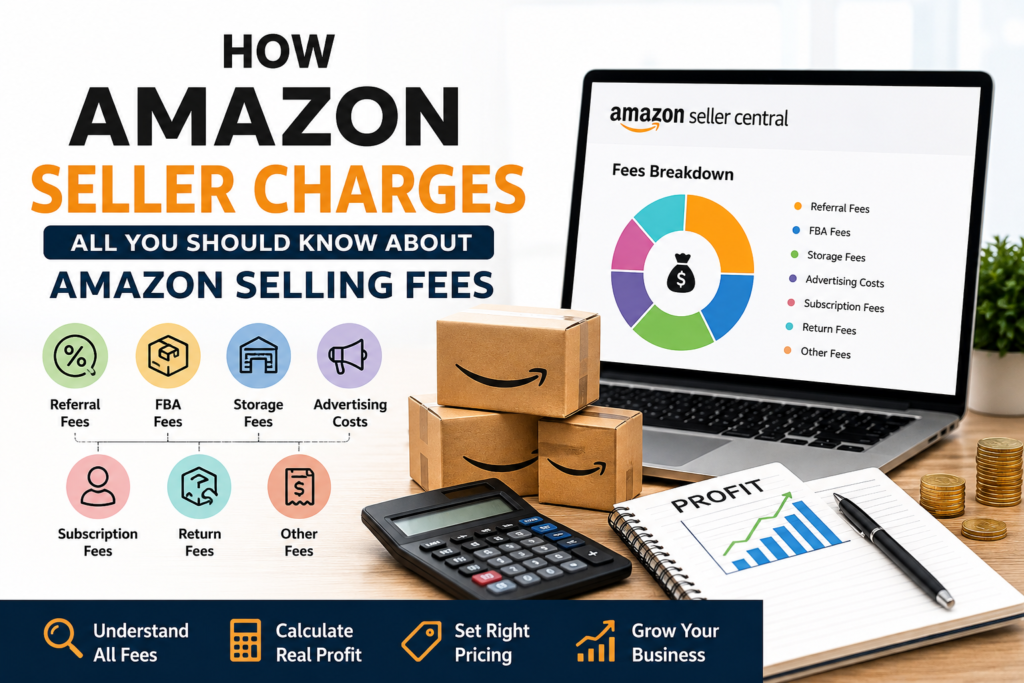
Hidden Amazon Seller Charges Beginners Often Ignore (How Amazon Seller Charges Explained)
Many new sellers aren’t paying attention to hidden Amazon seller charges and how Amazon seller charges works.
On the surface, it’s easy to sell on Amazon. Features list a product; customers order and you begin a stream of profits. When sellers start taking credit, however, they often discover that Amazon has multiple fees deducted before the balance lands in their bank account.
Product cost and selling price are typically only calculated by most beginners. They overlook referral fees, shipping, return deducts and costs of advertising. This makes them find it difficult to earn profits even when they are sold regularly.
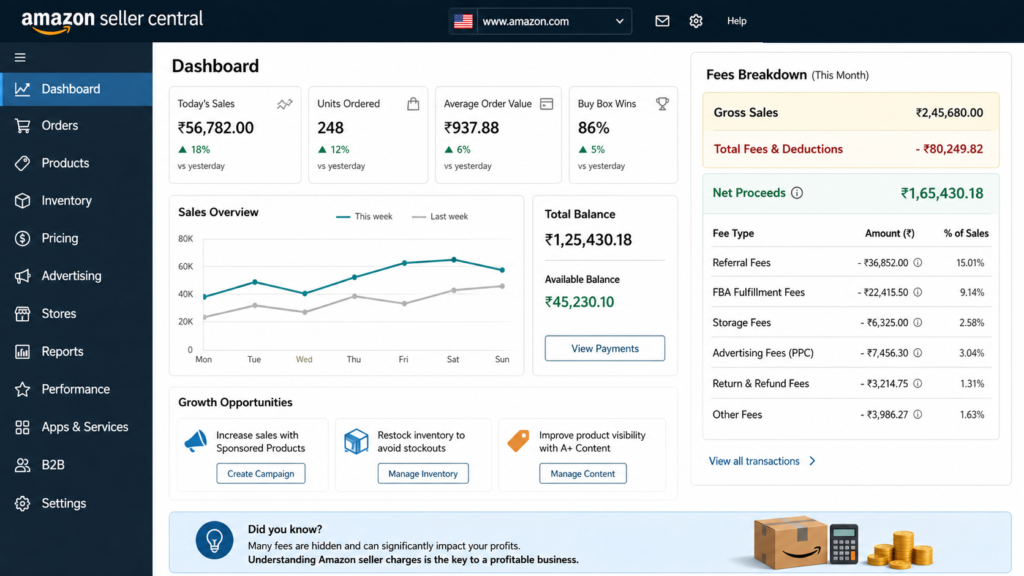
Amazon hidden seller fees can cost you money and they could cause losses if you don’t know what they are, but if you are headed towards a change in your current business strategy and end up selling on the platform, it can only benefit your business once you learn about its hidden retailer fees.
Let’s dive into this Amazon seller guide on how Amazon seller charges those hidden fees that many new sellers do not know of and how you can keep some unneeded unnecessary costs at bay.
Why Understanding How Amazon Seller Charges Is Important
It is helpful to understand how Amazon seller charges and why Amazon charges is vital.
Amazon offers millions of customers, reliable payment methods, logistics capabilities, and marketing resources. But the advantages have various forms of charges.
By knowing all Amazon seller fees, you can:
- Calculate actual profits
- Establish better pricing for products
- Avoid unexpected deductions
- Improve inventory management
- Reduce unnecessary spending
- Grow the business more efficiently
If not handled with care, even a significant-selling product can be unprofitable due to fees.
1. Referral Fees – Amazon's Sales Commission (How Amazon Seller Charges Commission)
Amazon charges the most common fees on each order as referral fees.
This charge is a percent of the sales price of the product, and is dependent on product category.
Average Referral Fee Range
- Electronics: 5% to 8%
- Fashion: 5% to 17%
- Home & Kitchen: Around 15%
- Beauty Products: 8% to 15%
Example
If the cost of your product is ₹1,000 and the referral fee is 15%, Amazon takes out the referral fee of ₹150 right away.
Referral fees often aren’t realized by many newbies and perhaps with lower margin items, the difference can be significant.
2. FBA Fees Can Rapidly Cut Profits (How Amazon Seller Charges FBA Costs)
Obviously, the convenience of Fulfilled by Amazon (FBA) is that Amazon stores, packs, ships and manages customer service of your products for you.
Nevertheless, there are several indirect expenses associated with FBA:
- Pick and pack fees
- Weight handling fees
- Return processing charges
- Packaging costs
Larger products typically have higher fulfillment charges, as they require more specialized packing and delivery methods.
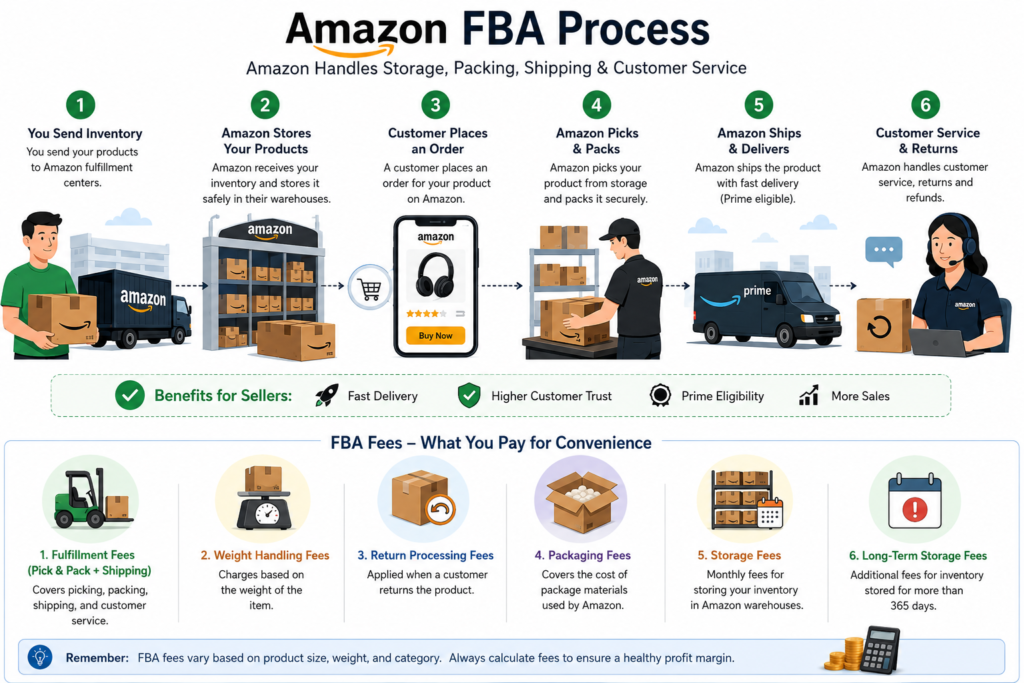
Whilst this will increase the speed of delivery and build customer confidence, sellers need to consider the cost implications of FBA and ensure that there is still a satisfactory profit margin left.
3. Long-Term Storage Fees (How Amazon Seller Charges Storage Fees)
Long-term storage charge is among more overlooked charges on Amazon.
Amazon has monthly storage costs for products in their warehouses. Excessive storing without demand may result in additional long term storage penalties.
Factors That Determine Storage Fees
- Product size
- Space occupied
- Inventory age
- Seasonal demand
Stoving inventory can effectively erode profits over time, and the owners don’t even realize it.
How to Avoid It
- Monitor inventory regularly
- Avoid overstocking
- Concentrate on the products that are more likely to sell quickly
- Enhance product descriptions and product ads
4. Advertising Costs (How Amazon Seller Charges PPC Fees)
While advertising on Amazon PPC can boost the visibility of products, a poorly-managed advertising campaign can end up being a major drain on your valuable budget.
There are many people who sell and start advertising without them tracking it:
- ACOS
- Conversion rate
- Keyword performance
- Profit margin
The higher the competition, the more the advertising costs will increase.
Common PPC Mistakes (Amazon Seller Charges Impact)
- Only bidding on keywords that have general targeting value
- Using unoptimized ads
- Ignoring negative keywords
- Advertising low-converting products
When PPC is managed properly, it will help in the minimization of wasted ad spend as well as maximizing returns for you.
5. Return and Refund Charges (Hidden Amazon Seller Charges)
Many sellers don’t account for product returns as one of the hidden costs.
When the customer returns the products:
- Amazon may provide a refund to the purchaser
- There may be additional fulfillment charges
- Damaged products cannot be sold
6. Subscription Fees (How Amazon Seller Charges Monthly Fees)
Amazon has two seller plans to offer:
Individual Plan
It is suitable for parties who are selling the property only from time to time.
Professional Plan
Advanced tools and monthly subscription fee.
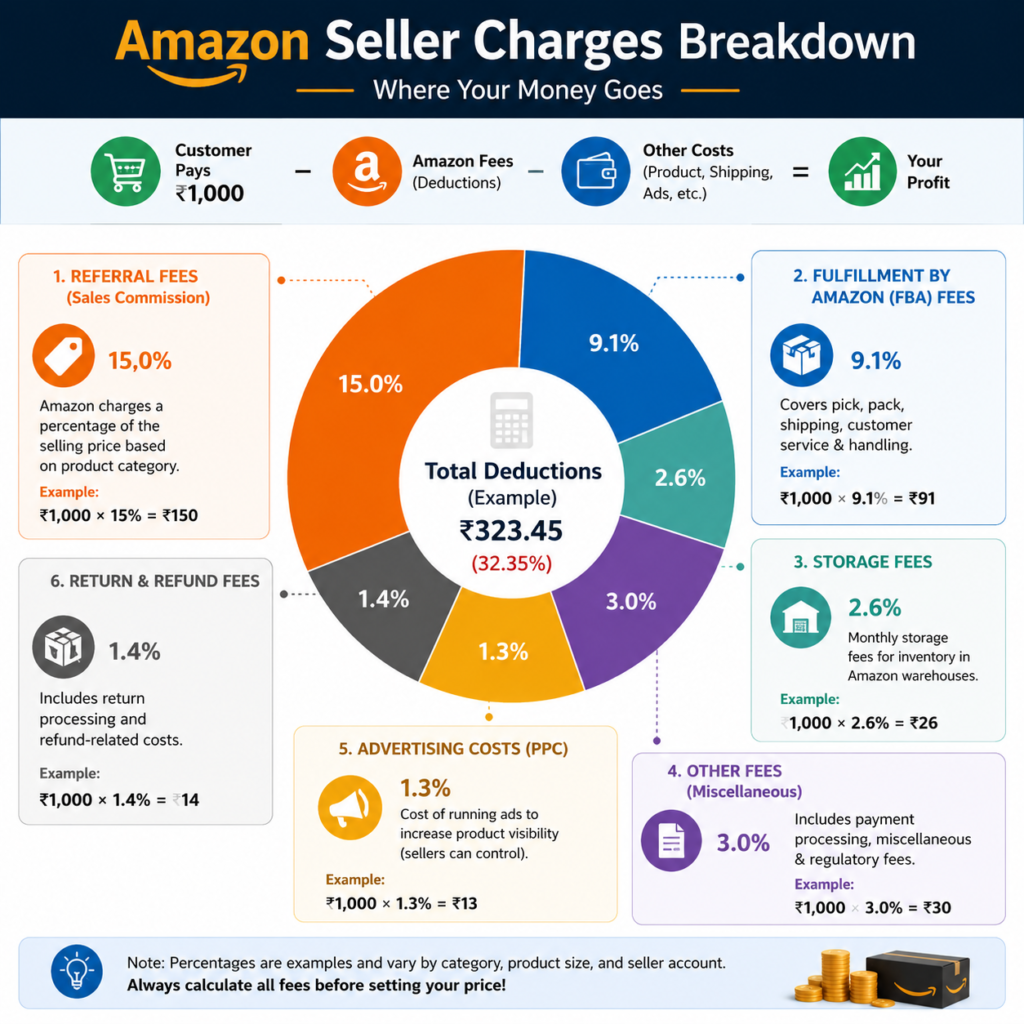
Real Example of Amazon Seller Charges (How Amazon Seller Charges Calculation)
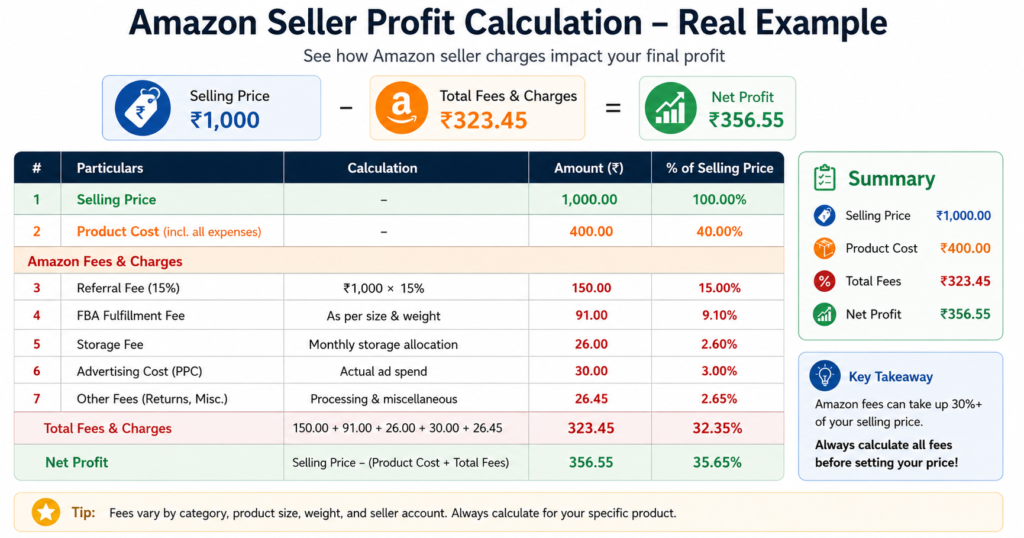
If the selling price of a product is ₹1000, then the selling price per unit would be.
Final Thoughts – Understanding How Amazon Seller Charges Works
As a newer player in the Amazon world, many salespeople do not account for all the hidden fees that Amazon has.
Understanding how Amazon seller charges helps sellers price products right, minimize losses, and establish a sustainable Amazon business.